Artist management software and band management software can look very similar, and there's a lot of crossover between the two. The main difference is usually who the software is designed for and the features it focuses on.
Artist management software is generally designed for artists and their management teams. It helps manage upcoming shows, bookings and the wider day-to-day running of an artist's career.
Depending on the software, this could include managing enquiries, providing quotes, confirming bookings, creating contracts and sending invoices. More advanced artist management platforms may also include tools for managing tours, travel, hotels, merchandise, documents and multiple users.
For larger artists or management teams, things like user permissions and audit tracking can also become important, particularly when several people are working on the same account.
What Can Band Management Software Do?
Band management software is usually more focused on helping band managers and band leaders organise the day-to-day running of their band.
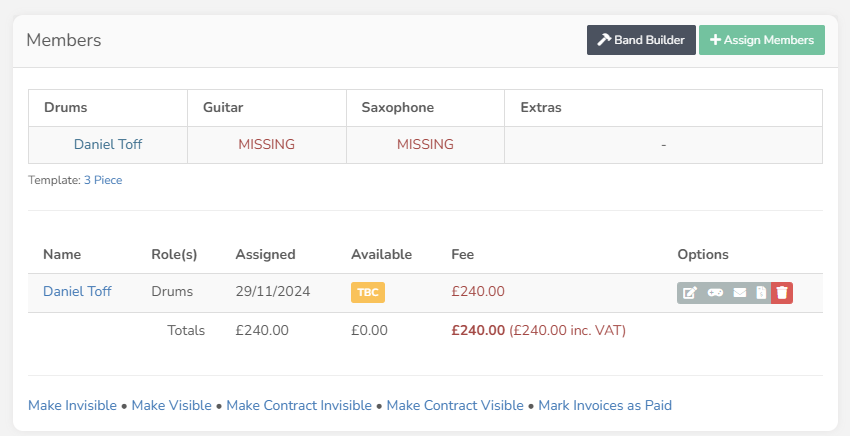
This can include managing gigs, enquiries, rehearsals, musicians, availability, line-ups, contracts and invoicing. It's particularly useful for function bands and other groups that regularly work with different musicians or line-ups.
In reality, there's often not a huge difference between artist management software and band management software. Both are designed to make managing gigs and the business side of being a musician easier.
The main differences tend to be the features available and how much detail the software goes into.
Key Differences Between Artist & Band Management Software
There isn't a clear line between artist management software and band management software. A lot of the core features are the same, particularly when it comes to managing gigs, clients, contracts and finances.
Where they start to differ is with more specialised features.
For example, a band manager running a function band might need to check musician availability, build different line-ups for each event and keep track of what each musician needs to be paid.
An artist management team organising a tour might be more interested in itineraries, hotels, travel arrangements, merchandise and managing access for several members of the team.
This doesn't mean you necessarily need one or the other. Many platforms can work for both, so it's more important to look at the individual features rather than what the software calls itself.
| Feature | Artist management software | Band management software |
|---|---|---|
| Gig & booking management | Yes | Yes |
| CRM / enquiries | Usually | Yes |
| Quotes & contracts | Often | Often |
| Invoicing | Often | Often |
| Musician availability | Sometimes | Very common |
| Line-up management | Sometimes | Common |
| Rehearsal management | Sometimes | Common |
| Tour itineraries | Common in touring-focused platforms | Sometimes |
| Hotels & travel | More common | Sometimes |
| Merchandise | Sometimes | Not usually |
| User permissions | Common in professional platforms | Common in larger platforms |
| Audit trails | More common in professional platforms | Varies |
| Client/artist management | Common | Varies |
Price Difference
Pricing varies a lot depending on the software and the features you need.
Artist management software aimed at professional management teams and touring artists can be more expensive, particularly where it includes tour management, advanced reporting, multiple users and other specialist features. Some professional platforms can cost $1,000 or more per year.
Band management software is generally more affordable, with many platforms starting at around $20–$50 per month.
However, price isn't necessarily determined by whether something is called artist or band management software. There are affordable artist management platforms and expensive band management platforms, so it's always worth comparing the features you actually need.
Artist Management vs Band Management: Who Wins?
There isn't really a winner because they're designed for slightly different types of users.
If you're running a band and mainly need help managing bookings, musicians, contracts and invoices, there's probably little reason to pay for a more complicated system designed around large-scale touring.
Likewise, if you're managing an artist who is regularly touring and needs detailed travel arrangements, itineraries, merchandise management and access for a larger team, a basic band management platform might not have everything you need.
There's also plenty of crossover. Band Pencil, for example, is used by bands, artists and management teams because many of the tools needed to manage bookings are the same regardless of how you describe yourself.
Which One Do You Need?
If you mainly need to manage gigs, enquiries, contracts, invoices, musician availability and band members, band management software will probably give you everything you need.
If you're managing the wider career of an artist, particularly where there's touring, travel, merchandise and several people involved in the management team, artist management or tour management software may be more suitable.
But don't get too caught up in the terminology.
There's a lot of overlap between artist management software and band management software. The best approach is to make a list of the features you actually need and compare platforms based on those requirements, rather than simply choosing one because it describes itself as "artist management" or "band management" software.